
Geoff’s Captivity
Pamela's WarThis flow traces Geoff’s movement from youthful friendship to Japanese captivity, survival, and irreversible physical and emotional damage.
increasing Bearing strength in each event
 decreasing
Bearing strength in each eventdecreasingCoffee Shop Friendship

Coffee Shop Friendship
A Familiar Meeting Place
Pamela meets Geoff at the Italian coffee shop in Stourbridge. He is handsome, slightly older, and connected to Gloria’s family.
Letters Ahead
Their friendship develops into correspondence after Geoff enters military service. The coffee shop becomes the last civilian setting associated with his youthful self.
War will preserve the letters but transform the man.
Officer Overseas
Officer Overseas
Service Expands
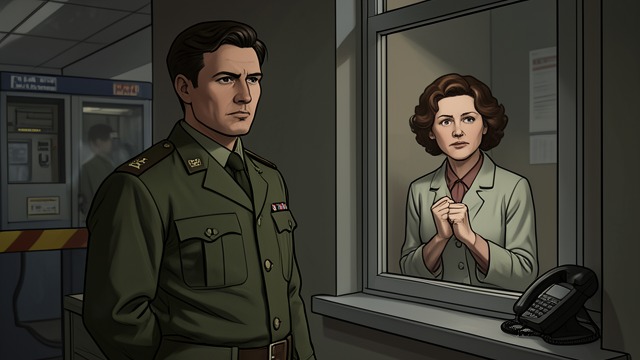
Geoff enlists and serves as an officer in the Far East. His earlier social confidence becomes part of a more dangerous military life.
Communication Ends
After his capture, letters stop. The silence leaves Pamela with the fear common to families whose loved ones disappear beyond official news.
Distance turns friendship into uncertainty.
Forced March
Forced March
Hunger and Labor
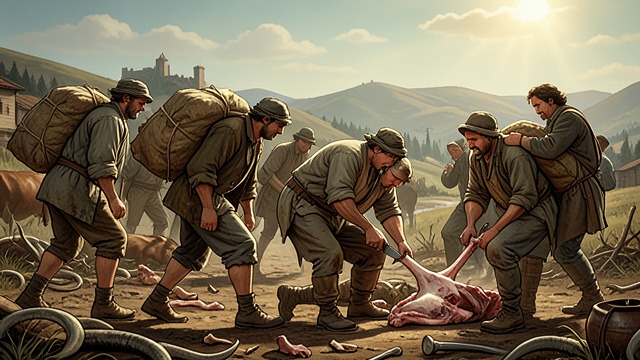
Geoff and fellow prisoners herd cattle during forced marches while being starved and brutalized. Their bodies become tools for survival under coercion.
Stolen Meat
The prisoners conceal stolen cattle by burying horns and hooves, then use Geoff’s butchery skills to divide the meat. Theft becomes a means of keeping captives alive.
Skill and solidarity resist a system designed to destroy them.
Broken Survivor
Broken Survivor
Liberation
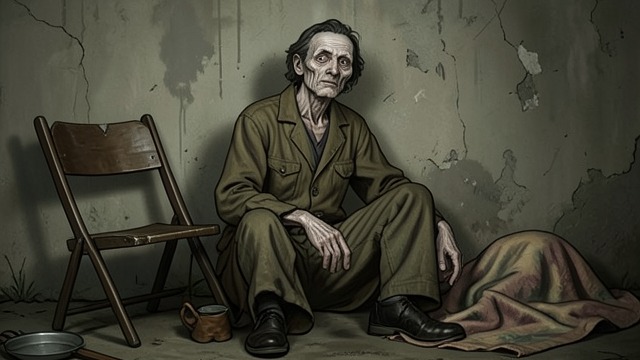
The defeat of Japan frees Geoff after three and a half years of captivity. He returns alive but profoundly weakened.
Irreversible Damage
He is thin, hollow-eyed, and no longer recognizable as the handsome young man Pamela knew. His treatment has altered his body, memory, and prospects.
Survival proves that liberation cannot undo imprisonment.
The Returned Letter
The Returned Letter
A Preserved Token
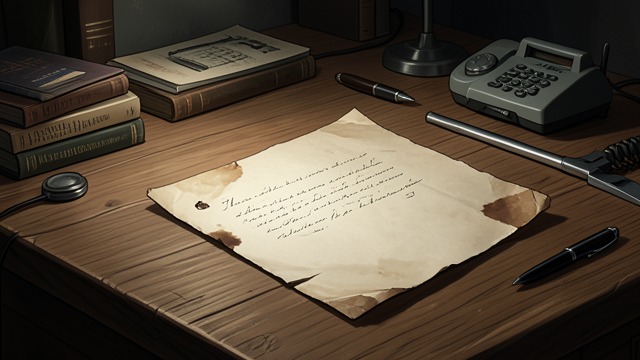
Pamela keeps Geoff’s final letter throughout the war. When they meet again, she returns it to him.
Memory Made Material
The letter links the coffee-shop youth to the damaged survivor. It acknowledges continuity while admitting that the person before her has been transformed.
Friendship survives as remembrance rather than recovered intimacy.
late 1930s
early World War II
during Japanese captivity
after Victory over Japan Day
postwar years
